
⚠️ Disclosure: This page contains affiliate links. If you buy through them, we may earn a commission at no extra cost to you.
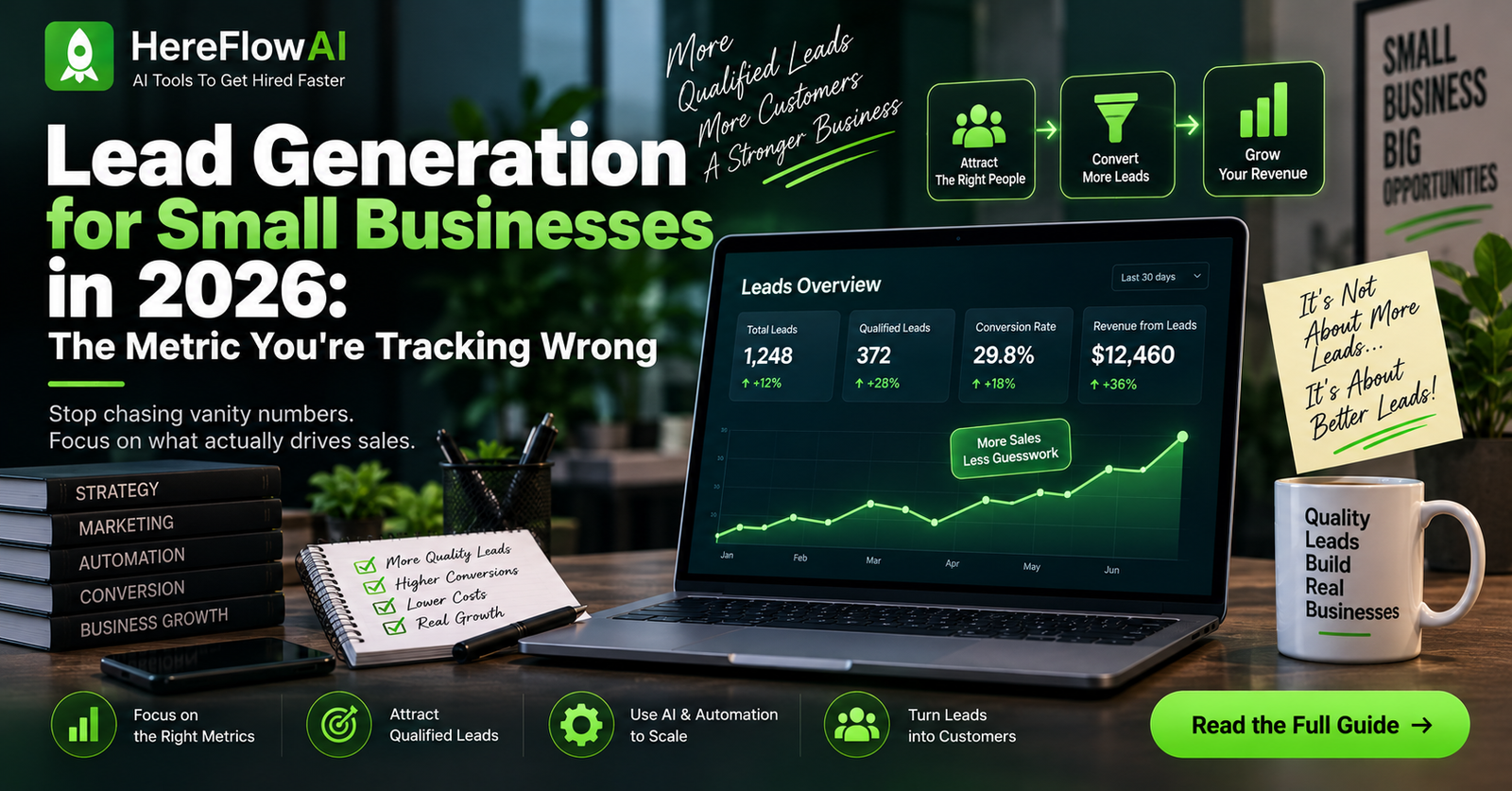
Most small businesses chase the lowest cost per lead. It’s the wrong target, and the math shows why:
$15 lead closing at 2%   →  $750 to acquire a customer
$60 lead closing at 25%  →  $240 to acquire a customer
The expensive lead is three times cheaper.
61% of marketers say generating quality leads is their biggest challenge — not volume. This guide is about that gap.
💡 The one formula that matters: CPA = CPL ÷ close rate. Track that number, not cost per lead.
Table of Contents
1. Why CPL Misleads You
Cost per lead measures what you paid. Cost per acquisition measures what it was worth.
CPA = CPL ÷ close rateA Facebook campaign generating leads at $30 with a 5% close rate has a $600 acquisition cost. A referral at $80 closing at 30% costs $267.
The cheaper channel is more than twice as expensive.
⚠️ The trap: cheap leads from shared aggregators and purchased lists often have the worst ROI despite the lowest headline price. You’re not buying leads — you’re buying customers.
2. Real Cost Per Lead by Channel
The 2026 spread across channels is more than 30× from cheapest to most expensive:
| Channel | Avg cost per lead |
|---|---|
| Organic search | $15–50 |
| Referrals | $25 |
| Email (existing list) | $53 |
| Affiliate | $73 |
| Facebook ads | $142 |
| Multi-channel prospecting | $188 |
| LinkedIn ads | $408 |
| PPC | $463 |
| Trade shows | $840 |
| All-channel average: ~$198 · spread is more than 30× | |
All-channel average: roughly $198.
The two numbers that matter most
Organic inbound costs about 61% less per lead than paid channels — and converts at roughly twice the rate.
That combination is why SEO shows up as the highest-ROI channel in almost every benchmark: roughly $22 back for every $1 spent over a 12–24 month window.
The catch: it takes 6–12 months to materialise. It’s the best channel and the slowest one.
3. What You Can Actually Afford to Spend
Your acceptable CPA is set by customer lifetime value, not by what feels expensive.
The benchmark: spend up to 20–30% of customer LTV on acquisition.
| Customer lifetime value | Acceptable CPA (20–30%) |
|---|---|
| $2,000 | $400–600 |
| $5,000 | $1,000–1,500 |
| $10,000 | $2,000–3,000 |
| $50,000 | $10,000–15,000 |
| Marketing budget: 5–12% of gross revenue established · 12–20% high growth | |
On overall budget: established businesses typically spend 5–12% of gross revenue on marketing; high-growth companies 12–20%.
A business doing $1M annually should budget roughly $50,000–120,000 a year.
💡 Work backwards. Know your LTV, set your maximum CPA, then evaluate every channel against it. A law firm paying $600 per lead isn’t overspending if a client is worth $50,000.
4. The Best Channels for Small Budgets
If you’re spending under $2,000/month, three channels give the best return.
🥇 Organic search — $15–50 CPL
Highest ROI, slowest to start. Requires a website that ranks, which means content and technical basics done properly.
The prerequisite: a site you control. Builder platforms limit URL structure, schema, and redirects — the exact controls SEO depends on.
Related: Website Builder vs WordPress 2026 →
🥈 Referrals — $25 CPL
Cheapest channel available and the most under-used. Most businesses never systematically ask.
The fix is a process, not a budget: after every completed project, an automated request goes out. That’s it.
🥉 Email to an existing list — $53 CPL
Delivers $36–42 per $1 spent for businesses with a list. Nothing else comes close.
But it only works if you have a list, which is why lead capture matters more than lead buying.
5. Exclusive vs Shared Leads
If you’re buying leads, this is the decision that matters:
Exclusive leads outperform shared leads by 3–5× on close rates, despite costing 2–3× more per lead.
Shared lead:     $25 · closes at 3%  →  $833 CPA
Exclusive lead:  $75 · closes at 20% →  $375 CPA
The shared lead is 2.2× more expensive per customer.
When a lead is sold to four competitors, you’re not competing on fit — you’re competing on who calls first. That’s a race that costs more than it returns.
6. Automating Follow-Up
Here’s where most small business lead generation actually breaks — not at generation, at response.
Speed to response correlates directly with conversion. Leads contacted within minutes convert dramatically better than leads contacted the next day. Most small businesses respond in hours or days because a human has to notice the form submission first.
What to automate
| Process | Effect |
|---|---|
| Instant lead response | Highest-return automation available — speed correlates directly with conversion |
| Lead qualification & scoring | Sales time goes to qualified prospects only |
| Follow-up sequences | Nobody has to remember |
| Review & referral requests | Asked automatically instead of never |
| CRM updates | No manual data entry |
⚠️ A note on AI SDRs: fully autonomous AI agents that prospect, write, and book meetings without human involvement have largely underperformed in practice. What works is AI-assisted human outreach — the AI handles research and drafting, a person handles judgement and the close.
AUTOMATION
STARTER KIT
Build steps + pricing
Build the Lead Response Automation Yourself
Instant lead response is the highest-return automation on this page. The Kit shows you exactly how to build it — plus 14 others.
- Lead research & scoring agent, step by step
- Follow-up sequences that run without you
- Review and referral request automation
- What to charge if you build these for clients
Final Verdict
Stop optimising for cheap leads. Start tracking CPA.
Calculate your customer LTV. Set your maximum acquisition cost at 20–30% of it. Then evaluate every channel against that number instead of against its headline price.
For most small businesses under $2,000/month: build organic search for the long term, systematise referrals for the short term, and automate lead response so the leads you already generate actually convert.
The businesses that win aren’t the ones with the lowest cost per lead. They’re the ones who know exactly what a customer is worth and buy accordingly.
FAQ
How much does lead generation cost for a small business?
Cost per lead ranges from $15–50 for organic search to $840 for trade shows, averaging roughly $198 across channels. Lead generation services for small businesses typically run $200–2,000/month.
What’s the cheapest way to generate leads?
Referrals at around $25 per lead, followed by organic search at $15–50. Both take longer to build than paid ads but cost far less and convert better.
What’s a good cost per lead?
There’s no universal figure. Aim for a cost per acquisition of 20–30% of customer lifetime value. A $2,000 LTV supports a $400–600 CPA; a $50,000 LTV supports $10,000–15,000.
Are cheap leads worth buying?
Usually not. Shared aggregator leads close at far lower rates — a $15 lead closing at 2% costs $750 per customer, while a $60 exclusive lead closing at 25% costs $240.
How long does SEO take to generate leads?
Typically 6–12 months to produce meaningful volume, but it delivers the highest long-term ROI at roughly $22 per $1 spent over 12–24 months.
Should I use AI for lead generation?
For research, enrichment, scoring, and drafting — yes. Fully autonomous AI SDRs that handle outreach end-to-end have largely underperformed. AI-assisted human outreach is what works.
Read next: Automation for Small Business 2026 →
Also read: AI Automation Services 2026 →