
Table of Contents
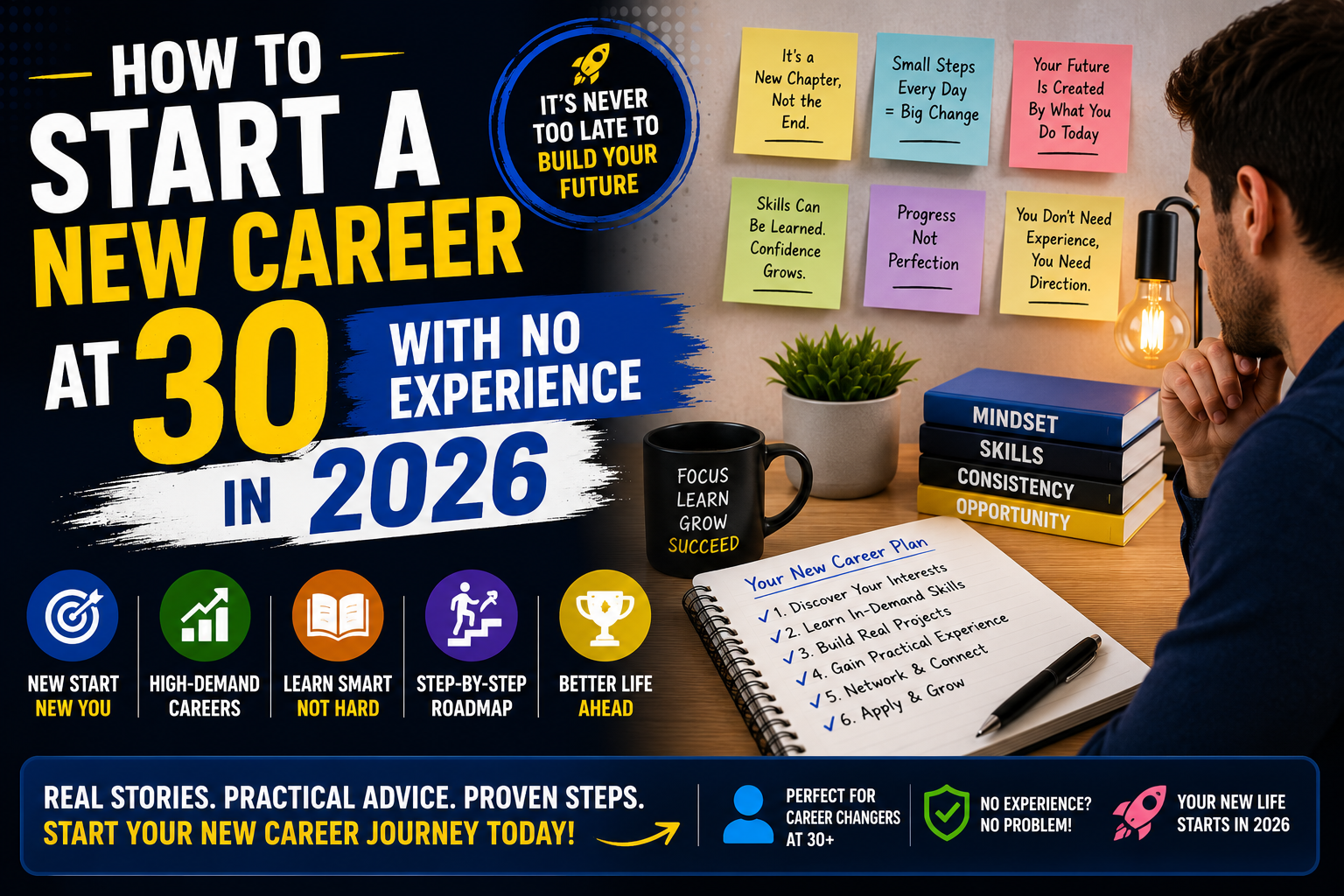
Starting a new career at 30 may feel challenging, but the truth is, you’re not really starting over — you’re starting from experience. You’ve spent years building skills, learning how to navigate the working world, and figuring out what you do and don’t want in a career. That gives you a major advantage.
Studies show that 29% of workers between the ages of 25 and 44 have successfully changed their careers and started a completely new life. Most people change careers at least once in a lifetime — so you’re definitely not alone.
💡 HereFlowAI Tip: In 2026, a career change is more accessible than ever — short certification programs, free training, and remote-first roles mean the leap to a new career can take months, not years.
Is 30 Too Late to Change Careers?
If you’re wondering if it’s too late to make a change, it’s absolutely not. Assuming you’ve been in your career for eight years, you’re less than one-fifth of the way through your professional life. If you invest in yourself now, you could reap the career benefits for another 30 or 40 years.
Employers today care more about your ability to learn, adapt, and bring transferable skills than whether your experience is an exact match. Whether you want more fulfilment, better pay, or a fresh challenge, making a career change doesn’t have to mean starting over from scratch.
Step 1 — Self-Assessment
Start by assessing your skills, interests, values, and strengths. Identify what you’re passionate about and what you excel at. Research different industries, job roles, and career paths that interest you.
Questions to ask yourself:
- What skills do I use naturally that others struggle with?
- What would I do if money wasn’t a factor?
- Which parts of my current job do I actually enjoy?
- What kind of work environment do I thrive in?
Step 2 — Identify Your Transferable Skills
Problem-solving, leadership, communication — these are highly transferable and valued in almost every industry. You don’t need to start from the bottom. Many industries welcome career changers, offering alternative entry routes and fast-track programmes to help you gain the skills you need.
Common transferable skills:
| Skill | New Career Applications |
|---|---|
| Communication | Marketing, sales, copywriting, HR |
| Project management | Product management, operations |
| Data analysis | Business intelligence, finance |
| Teaching/training | Instructional design, L&D |
| Customer service | UX research, account management |
Step 3 — Choose Your New Career Path
All of the major industries include entry-level careers that don’t require experience. If you’re looking to get your foot in the door, the key is identifying roles where your existing background is actually an asset.
Best career changes at 30 in 2026:
| New Career | Why It Works | Time to Job-Ready |
|---|---|---|
| Digital Marketing/SEO | High demand, learnable online | 3–6 months |
| Freelance Writing | Transferable from any field | 1–3 months |
| Web Development | Remote-first, high pay | 6–12 months |
| UX Design | Growing fast, good pay | 6–9 months |
| Data Analysis | Every industry needs it | 6–12 months |
| Freelancing (Fiverr) | Start with existing skills | Weeks |
Step 4 — Learn the Skills You Need Fast
The next step is to fill in any skill gaps you may be missing. This might mean pursuing a new degree, taking courses through online education such as bootcamps or other alternative education programs, or seeking out an internship. Put time into practising your new skills — this will boost your confidence and provide you with experience you can add to your resume.
Fastest ways to learn new skills in 2026:
- Udemy — practical courses from $9.99 on sale (most skills covered)
- Google Career Certificates — free, recognized by employers
- YouTube — free tutorials for most digital skills
- LinkedIn Learning — 1-month free trial
Listing online courses and certificates will help you stand out from other applicants and show employers you’re committed to your new role.
Step 5 — Update Your Resume for Your New Career
A career change resume needs a different strategy than a standard resume. Your goal is to highlight transferable skills — not your old job titles.
Explain how your unique experience and background are really an asset to the company, not a drawback. Boast about your transferable skills and explain how they align with the job you’re applying for.
Career change resume strategy:
- Lead with a strong professional summary focused on your target role
- Create a dedicated Skills section at the top
- Reframe bullet points around transferable achievements
- Use an AI resume builder to optimize for ATS systems
Step 6 — Start Freelancing While You Transition
One of the fastest ways to gain experience and income simultaneously is freelancing. Fiverr lets you start offering services immediately — even before you land a full-time role.
Why freelancing helps your career change:
- Builds real portfolio samples quickly
- Generates income during transition period
- Proves your new skills to future employers
- Lets you test your new career before committing fully
Best Fiverr gigs for career changers:
- AI prompt writing — no technical background needed
- Canva design — learnable in days
- Content writing — transferable from almost any field
- Virtual assistant — project management skills transfer directly
Final Verdict
At 30, you have a huge advantage — you know yourself better, you’ve built valuable skills, and you’re in a great position to make intentional career choices. Making a career change doesn’t have to mean starting over from scratch. With the right approach, you can take control of your career and move towards something that truly fits you.
Start with self-assessment, identify your transferable skills, choose a learning path on Udemy, update your resume with Resume.io, and consider freelancing on Fiverr while you transition. The tools are all available — the decision is yours.
FAQ
Is it too late to start a new career at 30?
Absolutely not. At 30, you’re less than one-fifth of the way through your professional life. Investing in a career change now gives you 30–40 more years to benefit from it.
How do I change careers at 30 with no experience?
Start with self-assessment, research your target field, identify transferable skills, gain relevant skills through online courses, and apply for entry-level positions while building a portfolio.
What is the fastest career to learn at 30?
Digital marketing, freelance writing, and AI prompt engineering can make you job-ready in 1–3 months. Web development and data analysis take 6–12 months but pay significantly more.
How do I explain a career change on my resume?
Lead with a strong professional summary targeting your new field. Highlight transferable skills and reframe experience in terms of value to your new career — not just job duties.
Can I freelance while changing careers?
Yes — Fiverr lets you start earning with your current skills immediately, while you build new ones. Many successful career changers use freelancing to bridge the income gap during transition.
What online courses help with a career change?
Udemy offers courses in digital marketing, web development, data science, UX design, and AI — all from $9.99 on sale. Google Career Certificates are free and recognized by major employers.
Read next: Best AI Resume Builders 2026 →
Also read: Best Fiverr Gigs for Beginners 2026 →