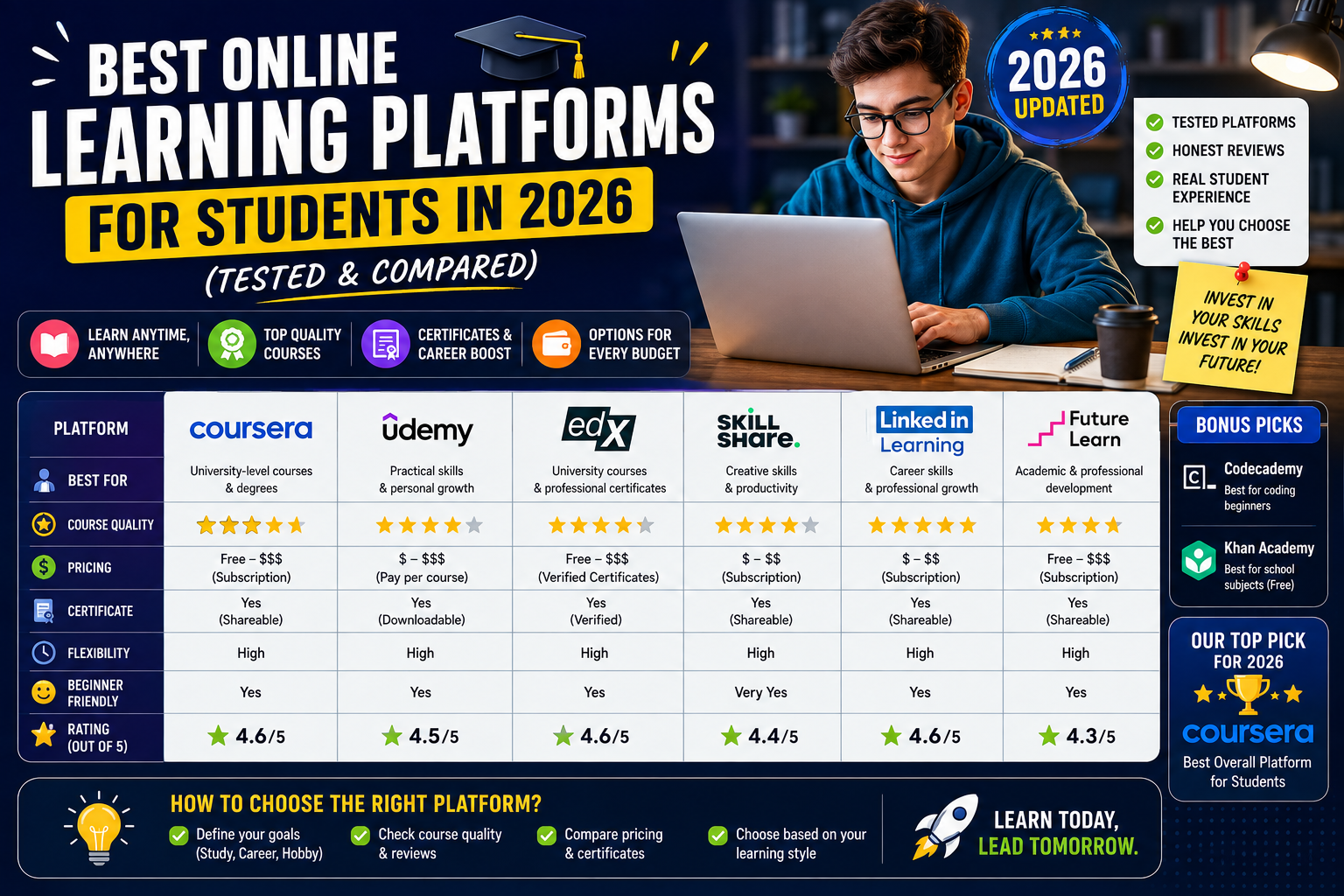

It’s 2 AM, you’ve got a paper due, rent to think about, and a nagging feeling that your degree alone won’t be enough when you graduate. Sound familiar? You’re not wrong to worry — and you’re definitely not alone. More students than ever are stacking real, marketable skills on top of their coursework, and the platform they pick to do it matters more than most people realize.
Some platforms will drain your student budget for a subscription you’ll forget to cancel. Others will hand you a certificate nobody’s ever heard of. The right one, though, can genuinely change your trajectory — turning a weekend of learning into a freelance gig, a portfolio piece, or the one line on your resume that gets you noticed.
💡 HereFlowAI Tip: Ignore the brand name. Ask one question before you pay for anything: “Could I use what I learn here to make money or land an interview within 30 days?” If the answer’s no, keep looking.
Table of Contents
What Actually Matters When Picking a Platform
Forget the marketing pages for a second. Here’s what genuinely separates a platform worth your money from one that isn’t:
Does it teach something you can use, not just something that sounds impressive on paper? Is it a one-time cost or a subscription quietly renewing every month you forget about? Can you actually finish it around a class schedule and a part-time job? And when you’re done — does the certificate mean anything to an actual human doing the hiring, or just to you?
Most students skip straight to “which one is cheapest” — understandable, but it’s the wrong first question. The right one is: which of these gets me from curious to employable the fastest?
The 5 Best Platforms for Students Right Now
#1 — Udemy: The Budget Pick That Doesn’t Feel Cheap
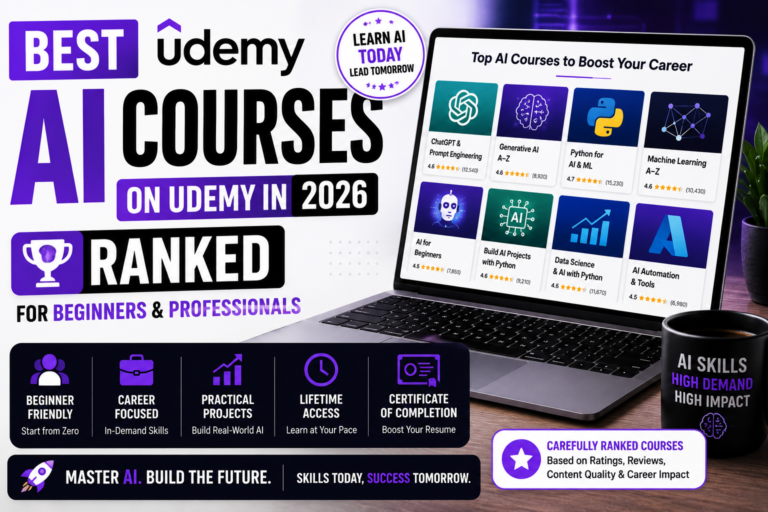
Here’s the thing about Udemy nobody tells you: half the value is in when you buy. Courses that list for $80 routinely drop to $9.99 during sales, and there’s no subscription trap waiting to bill you in month three. You pay once, you own it forever.
What makes it genuinely useful for students specifically is the range — AI tools, coding, freelancing, design, video editing — taught by people actually doing the work, not academics reading slides. If your goal is “learn a skill this weekend, start earning from it next month,” this is where most students land.
Real talk: not every course is great. Check the review count and rating before buying — anything under 4.3 stars with fewer than 500 reviews is a gamble.
#2 — Coursera: When You Need the Name on Your Resume to Mean Something
Coursera plays a different game entirely. It’s built around partnerships with real universities — Yale, Google, IBM — so when you finish a specialization, you’re not just learning, you’re building a credential that a recruiter can actually verify. That credibility comes at a price, though: subscriptions and per-course fees run noticeably higher than Udemy.
This is the platform for the student who’s thinking three moves ahead — the one applying to grad school or a corporate role where “who backed this course” carries real weight.
#3 — Skillshare: For the Student Who’s Building Something on the Side
If your side project is more paintbrush than spreadsheet, Skillshare’s project-based classes hit different. It’s a monthly subscription that unlocks everything at once, which makes it ideal if you’re the type who binges through five classes in a weekend rather than one every month.
It’s weaker on technical or business skills — don’t go here expecting a coding bootcamp. But for illustration, video editing, writing, or design, it’s genuinely one of the more enjoyable ways to learn.
#4 — LinkedIn Learning: The Quiet Resume Booster
This one’s easy to overlook, but here’s what makes it worth mentioning: every course you finish shows up directly on your LinkedIn profile. Recruiters scrolling your page see it. It won’t teach you to code from scratch, but for professional and soft skills — negotiation, project management, communication — it doubles as a subtle signal to anyone checking you out before an interview.
#5 — YouTube: Free, Chaotic, and Genuinely Useful for One Thing
Nobody’s handing you a certificate for watching YouTube tutorials, and the lack of structure can send you down a rabbit hole fast. But as a zero-cost way to figure out whether you even like a subject before spending a cent on it — it’s still unbeaten. Watch three hours of a coding YouTuber before you commit $50 to a bootcamp. It’ll save you money either way.
Side-by-Side Comparison
| Platform | How You Pay | Best For | Certificate Weight |
|---|---|---|---|
| Udemy | One-time, often under $15 | Fast, practical skills | Nice to have |
| Coursera | Subscription or per-course | University-backed credibility | Strong |
| Skillshare | Monthly, all-access | Creative side projects | Light |
| LinkedIn Learning | Monthly subscription | Resume/profile boost | Moderate |
| YouTube | Free | Testing an interest first | None |
Which One Fits Your Situation
Broke and want to start earning from a new skill by next month? Udemy. Applying somewhere that’ll actually check the credentials? Coursera. Building a creative portfolio on the side? Skillshare. Trying to look sharper on LinkedIn before job hunting? LinkedIn Learning. Not even sure the topic is for you yet? Start with YouTube — it costs nothing but a Saturday afternoon.
Most students end up using two of these, not one — YouTube to explore, then Udemy or Coursera once they know what they’re actually chasing.
FAQ
What is the best online learning platform for students in 2026?
Udemy tends to win for most students because of its low one-time cost and practical, immediately usable course library — no subscription required.
Are online learning platforms actually worth the money?
When the course teaches something practical and job-relevant, yes — often more cost-effective than traditional education, with the flexibility to learn around your schedule.
What’s the cheapest way for students to learn online?
Udemy’s frequent sales (courses often under $15) make it the most budget-friendly paid option, while YouTube remains genuinely free.
Do certificates from these platforms actually matter to employers?
It depends who’s issuing it. Coursera’s university-backed credentials carry more institutional weight; Udemy’s completion certificates matter more when paired with real portfolio work.
Can students realistically learn for free?
Yes — YouTube is a legitimate starting point, though it lacks structure, accountability, and certification.
Which platform is best if I want to start freelancing?
Udemy, hands-down — its course library is built around exactly the skills (AI tools, design, writing, video editing) that translate directly into freelance income.
Read next: Best Udemy Courses for Job Seekers 2026 →
Also read: High Income Skills to Learn in 2026 →